Animals of Corcovado National Park
Corcovado packs 3% of the world’s biodiversity into one park. See what wildlife you’ll actually spot (monkeys, sloths, tapirs), what’s rare (pumas, jaguars), and why a certified guide is essential.
Last updated: May 4, 2026
Corcovado National Park contains 140 mammal species, 400+ bird species, 116+ reptiles and amphibians, and an estimated 6,000+ insect species – around 3% of the world’s total biodiversity packed into 424 km². All four Costa Rican monkey species live here, along with all six wild cat species, the endangered Baird’s tapir, and the largest scarlet macaw population in Central America. Most visitors reliably see monkeys, sloths, macaws, and coatis. Tapirs are genuinely common near Sirena. Pumas are possible, especially at dusk on overnight stays. Jaguars exist but require luck. The Fer-de-Lance and bull sharks are real, and they are why a certified guide is non-negotiable.
Curious what an extra morning in the forest adds? Explore a Sirena overnight with guided wildlife walks, then compare forest and marine options below. Explore One Night At Sirena From Drake Bay
| Mammals | 140+ | Jaguar, puma, Baird’s tapir, 4 monkey species, 2 sloth species, giant anteater |
| Birds | 400+ | Scarlet macaw, harpy eagle, king vulture, 6 toucan species, great curassow, Baird’s trogon |
| Reptiles | 116+ | American crocodile, spectacled caiman, fer-de-lance, bushmaster, 28 lizard species |
| Amphibians | 40+ frog species | Red-eyed tree frog, poison dart frogs (granular, Golfo Dulce), glass frogs |
| Insects | 10,000+ estimated | Blue morpho butterfly, bullet ant, 100+ butterfly species, leaf-cutter ants |
| Marine Life (offshore) | Hundreds of species | Humpback whale, 4 sea turtle species, bottlenose dolphin, bull shark, hammerhead shark |
| Endemic / Near-Endemic Birds | Several | Black-cheeked ant-tanager (Osa endemic), Baird’s trogon, yellow-billed cotinga |
| Wild Cat Species | 6 (all of Costa Rica’s) | Jaguar, puma, ocelot, margay, jaguarundi, oncilla |
Sources: SINAC Corcovado National Park species records, Wikipedia Corcovado, Wildlife Worldwide, peer-reviewed Oryx journal jaguar population studies (2025). Data verified March 2026.
What Makes Corcovado’s Wildlife Different From Any Other Park in Costa Rica?
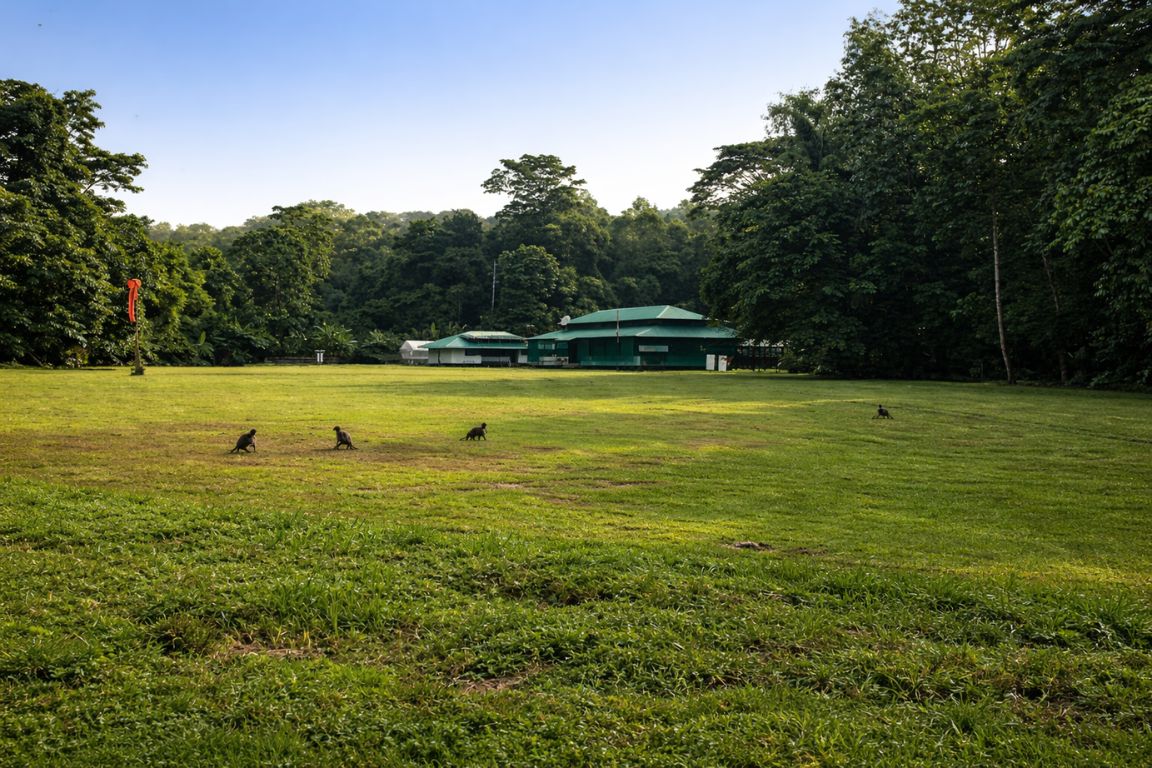 Corcovado is the only park in Costa Rica where all six wild cat species coexist, all four monkey species share the same forest, and a visitor on a single trail might encounter a tapir, a puma, and a harpy eagle within the same morning. The difference isn’t just species count – it’s functional ecosystem density. Animals here behave like wild animals in an intact food web, not like habituated populations adjusting to tourist pressure. That distinction changes what the experience feels like.
Most wildlife destinations in Costa Rica are remarkable. Manuel Antonio has monkeys at close range. Tortuguero has sea turtles and river crocodiles. Arenal has birds and poison dart frogs. What Corcovado has that none of them do is completeness. This is one of the last remaining tracts of lowland Pacific tropical rainforest in the Americas large enough to sustain a fully intact predator-prey ecosystem. The jaguars here hunt tapirs. The tapirs regulate vegetation. The peccaries turn soil. The harpy eagles take monkeys. Everything is connected, and the connections are active.
That matters for what visitors actually experience. Animals near Sirena don’t approach for food scraps or pose for photos. They move through the forest on their own schedules, doing what they actually do – which, for a wildlife traveler paying attention with a good guide, is significantly more interesting than anything staged or habituated. A white-lipped peccary herd of 80 animals crossing a trail isn’t performing. It’s just moving. And the sound and smell and ground vibration of it happening three meters away is something that stays with people for years.
The science backs this up. Camera trap monitoring during 2015-2021 published in the journal Oryx found that jaguar abundance in Corcovado increased over the study period, with density estimates comparable to relatively stable populations elsewhere in the jaguar’s range. The park is working. The ecosystem is functioning. That is rare.
We’ve mapped out how to visit Corcovado National Park tours based on what actually matters – understanding you can’t go solo, choosing between ranger stations, and deciding if you’re up for serious jungle trekking.
What Big Mammals Can You Actually See in Corcovado?
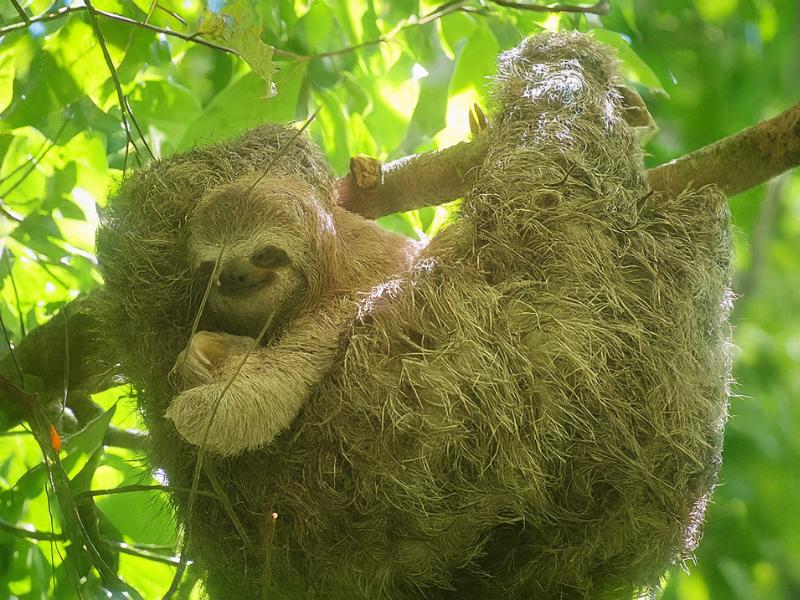
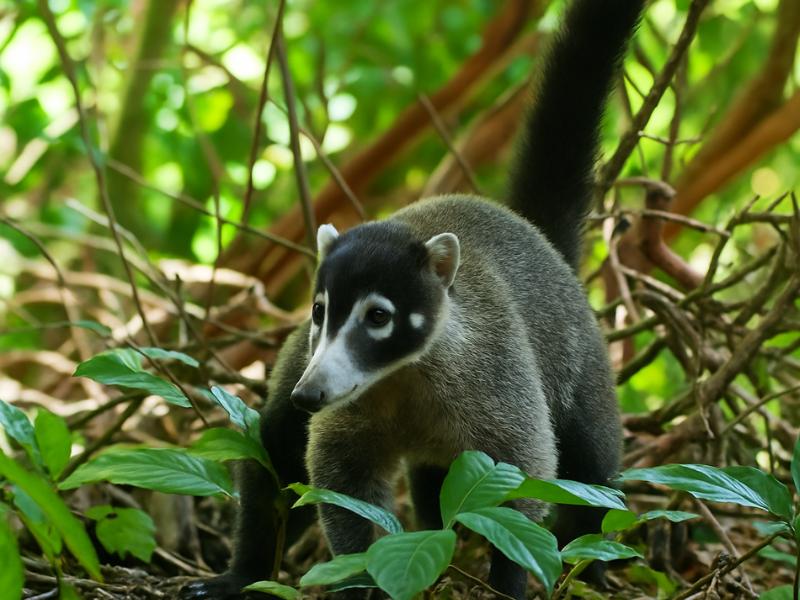
The mammals most reliably seen on a guided visit to Corcovado are all four monkey species, two-toed and three-toed sloths, white-nosed coatis, northern tamanduas, Baird’s tapirs (especially near Sirena at dawn), and white-lipped peccary herds. The six wild cat species are all present, with puma sightings possible on overnight stays at dusk. Jaguars exist in increasing numbers, but a sighting requires luck regardless of season or duration of stay.
Here’s the honest breakdown on each of the major mammals, from most reliably seen to most elusive:
The four monkey species are practically guaranteed on any visit. Howler monkeys announce themselves at dawn with a sound that carries for miles – a deep, territorial roar that sounds like something much larger than a monkey has moved into the canopy above you. Spider monkeys are the acrobats, swinging through the upper canopy with arms noticeably longer than their legs, their prehensile tails functioning as a fifth limb. White-faced capuchins are everywhere and opinionated about it – highly intelligent, endlessly curious, occasionally aggressive if you’re carrying food. Squirrel monkeys are the smallest and most endangered of the four, traveling in troops of up to 70 animals with a distinctive chatter of whistles. Fewer than 3,000 are estimated to remain in the wild across Costa Rica and Panama combined. Corcovado holds one of their most significant remaining populations.
Sloths live in Corcovado in both species – two-toed and three-toed – though spotting one without a guide who knows where to look is largely a matter of chance. They move almost imperceptibly slowly, blend into the canopy, and can be invisible even a few meters away. Guides who know the trails scan specific tree species where sloths rest predictably. When you do see one, properly, it tends to stop everyone in the group for several minutes.
Baird’s tapir is the largest land mammal in Central America, growing up to 880 pounds with a short, flexible prehensile snout used to gather vegetation. They’re endangered across most of their range and exist in meaningful numbers in only a handful of protected areas, Corcovado being one of the most significant. Near Sirena Station, tapir beach walks at dawn are one of the park’s signature experiences – these large, prehistoric-looking animals move along the beach at low light, completely unbothered by the water, occasionally wading out into the shallows. Our overnight guides specifically position early morning walks to intercept tapir beach routes on the 2-day overnight at Sirena from Drake Bay.
White-lipped peccaries travel in herds that range from 20 to over 100 animals, moving through the forest in a churning, snorting mass that smells strongly of musk before you hear anything else. They’re not dangerous if your guide manages the approach correctly, but a surprised peccary herd has been known to send hikers scrambling for higher ground. They’re one of those Corcovado encounters that isn’t in any guidebook photograph – it’s purely a sound and smell and presence experience.
The wild cats are the ones every visitor wants and the ones we’re most honest about the odds of. All six species present in Costa Rica – jaguar, puma, ocelot, margay, jaguarundi, and oncilla – live within the park. Puma sightings from Sirena Station during late afternoon are more common than most guides will tell you publicly. The 4 PM to 6 PM window near the station edges has produced puma sightings on a meaningful proportion of our overnight stays at Sirena Station. Jaguars are genuinely rare as a sighting, though camera trap data shows their population is healthy and growing. They tend to appear when nobody is specifically looking – crossing a trail at dawn, moving along a riverbank at dusk. If it happens, it happens.
If you’re considering the overnight trek, here’s our Sirena Ranger Station guide so you understand what’s involved in reaching and staying at Corcovado’s most remote and wildlife-rich station.
| All 4 monkey species | Very High | Dawn and mid-morning | Squirrel monkey: Endangered. Others: Least Concern. |
| Two-toed sloth | High (with guide) | Any time – stationary in canopy | Least Concern |
| Three-toed sloth | High (with guide) | Morning – basks in sunlit trees | Least Concern |
| Baird’s Tapir | Moderate-High near Sirena | Dawn beach walks; dry season | Endangered |
| White-lipped Peccary | Moderate-High (dry season) | Morning interior trails | Vulnerable |
| Northern Tamandua | Moderate | Daytime; often near beach | Least Concern |
| White-nosed Coati | Very High | Any time – forages in groups | Least Concern |
| Puma | Low-Moderate (overnight) | 4-6 PM near Sirena edges | Least Concern (locally vulnerable) |
| Ocelot / Jaguarundi | Low | Dusk and dawn | Least Concern (locally threatened) |
| Jaguar | Very Low (but increasing) | Any time – no predictable pattern | Near Threatened (IUCN); Endangered locally |
| Giant Anteater | Low | Morning, open areas | Vulnerable |
| Silky Anteater | Very Low | Nocturnal; requires guide with spotlight | Least Concern |
Sighting likelihood based on field observations from our guide team, 2015-2025. Individual sightings are never guaranteed.
What Birds Should You Look For in Corcovado National Park?
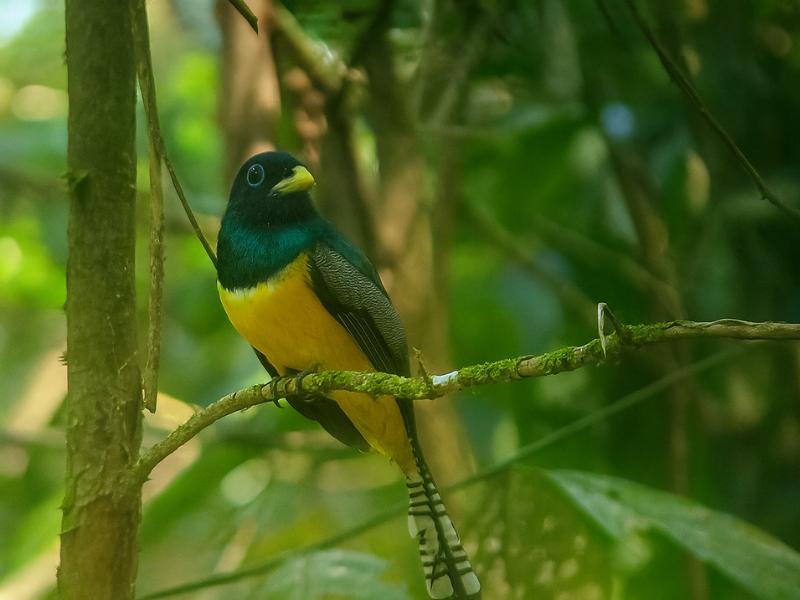
Corcovado holds 400+ bird species, including the largest scarlet macaw population in Central America, a small harpy eagle population, king vultures, six toucan species, and several birds found nowhere else in Costa Rica including the black-cheeked ant-tanager and Baird’s trogon, both endemic or near-endemic to the Osa Peninsula. For dedicated birders, the park consistently produces life-list species that can’t be ticked anywhere else.
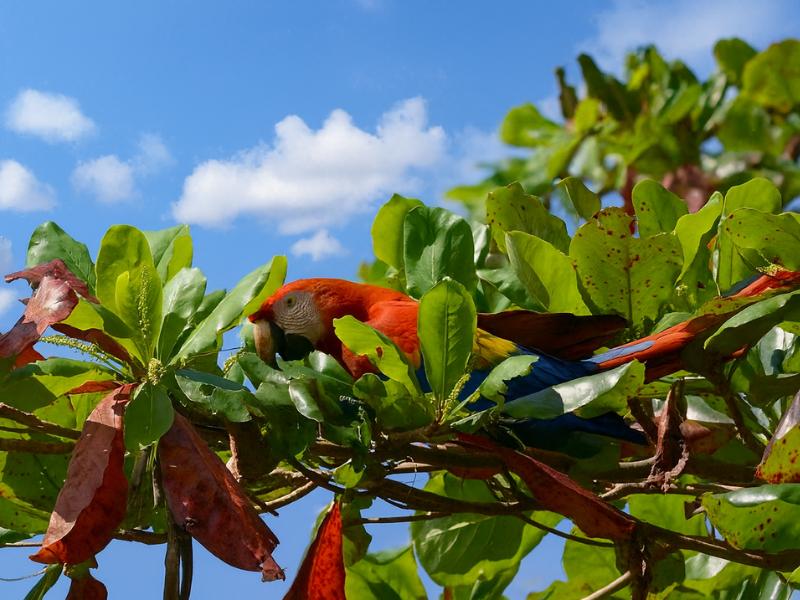
The scarlet macaw deserves its own moment before anything else. Corcovado’s macaw population is the largest in Central America, and they are not subtle about it. They fly in pairs and small flocks, red and blue and utterly vivid against the green canopy, with a raucous call that announces them from 200 meters away. You’ll hear them before you see them, and when you do see them – a pair locking wingtips in a lazy thermal above the beach, or three of them perched in a coastal almond tree cracking nuts – it’s one of those sights that makes the whole trip feel justified.
Beyond macaws, here’s what Corcovado offers that makes serious birders plan trips specifically around the park:
The Osa endemics and near-endemics. The black-cheeked ant-tanager (Habia atrimaxillaris) is found nowhere else on Earth outside the Osa Peninsula. The yellow-billed cotinga is near-endemic to Costa Rica’s Pacific lowlands. Baird’s trogon – vivid green and orange, named after naturalist Spencer Fullerton Baird – is a Corcovado specialty. The turquoise cotinga, fiery-billed aracari, and riverside wren round out a suite of species that make the park a mandatory stop on any serious Costa Rica birding itinerary.
The harpy eagle. One of the most powerful birds of prey in the world, the harpy eagle hunts monkeys and sloths from the forest canopy using talons the size of grizzly bear claws. Corcovado holds one of Costa Rica’s few remaining breeding populations. Sightings are rare and considered genuinely special even by experienced local guides. When one appears, everything stops.
The king vulture. With a bald, vividly multicolored head and a wingspan up to 1.8 meters, the king vulture soaring above the Corcovado canopy is an unmistakable sight. They’re regularly seen in thermals above Sirena in the morning hours.
The great curassow. A large, ground-dwelling bird with a distinctive curved crest, the great curassow is spotted foraging on the forest floor at Sirena with surprising frequency. It’s the kind of bird that turns up calmly in the middle of a trail, eyeing you with something between indifference and mild offense at being interrupted.
| Scarlet Macaw | Very High | Coastal trails, beach, and forest edges – any time | Largest Central American population. Pairs and small flocks. |
| Chestnut-mandibled Toucan | High | Forest canopy, fruiting trees | Most common of 6 toucan species in the park. |
| Great Curassow | High near Sirena | Ground-level forest trails | Large crest, ground-dwelling. Often unfazed by human presence. |
| King Vulture | Moderate | Morning thermals above canopy | Multicolored bald head. Unmistakable in flight. |
| Baird’s Trogon | Moderate (with guide) | Forest interior, mid-canopy | Osa Peninsula specialty. Green and orange. Near-endemic. |
| Black-cheeked Ant-Tanager | Moderate (with guide) | Understory, dense vegetation | Osa Peninsula endemic. Found nowhere else on Earth. |
| Yellow-billed Cotinga | Low-Moderate | Sierpe River mangroves; coastal forest | Near-endemic to Costa Rica Pacific lowlands. |
| Harpy Eagle | Very Low | High canopy – no predictable location | One of world’s most powerful raptors. Breeding population at Sirena area. |
| 16 Hummingbird Species | High | Flowering plants along all trails | Includes bronze-tailed sicklebill and several endemic-range species. |
| Great Tinamou | Moderate | Forest floor – heard more than seen | Distinctive haunting call. Often heard at Sirena before dawn. |
One birding note worth knowing before you arrive: Corcovado’s primary forest structure means most bird activity happens in the canopy, often 30 meters or more above the trail. Binoculars are not optional – they’re the difference between “something moving up there” and actually seeing the bird. A spotting scope with your guide elevates the experience further, particularly for the high-canopy species like raptors and cotingas.
Questions about what you’re likely to see on a specific date? Mateo and the team answer them daily. Start here.
Are There Dangerous Animals in Corcovado You Need to Know About?
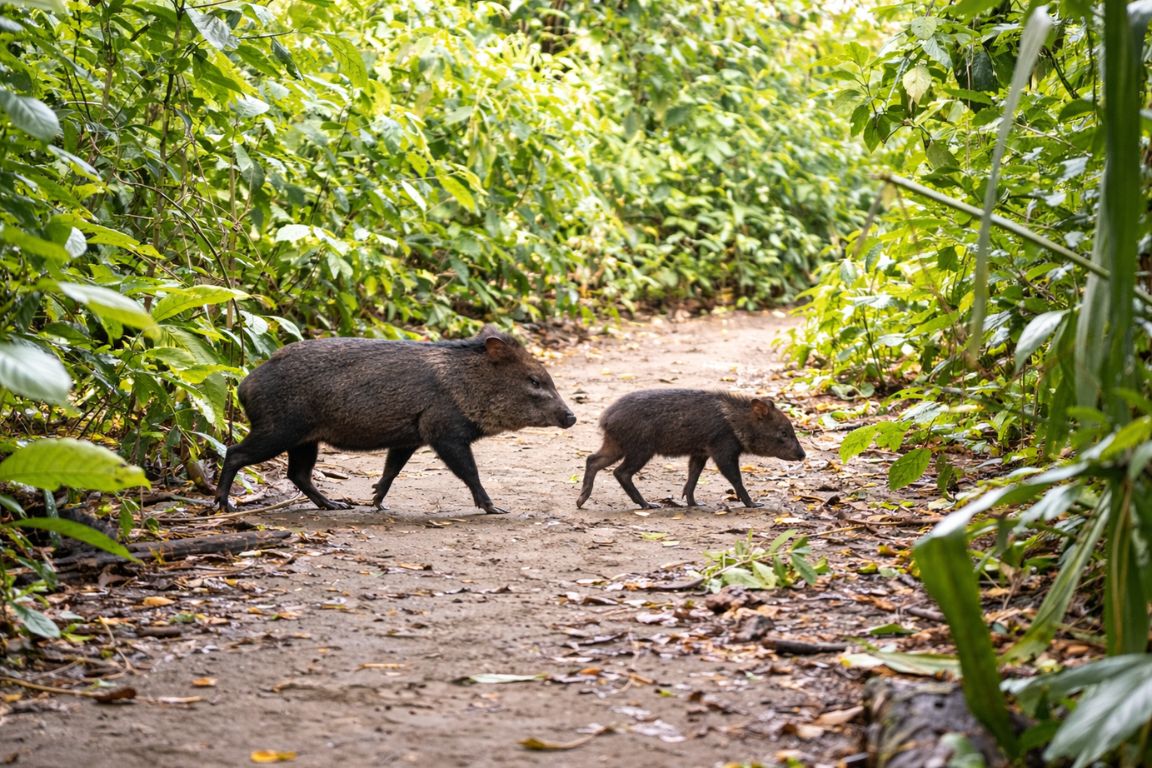 Yes. The fer-de-lance is the most dangerous snake in Costa Rica and lives throughout Corcovado’s lowland forest. Bull sharks and American crocodiles patrol the river estuaries, including the Rio Sirena and Rio Claro crossings on foot routes. White-lipped peccary herds can be hazardous if surprised. Bullet ants deliver one of the most painful stings in the insect world. None of these are reasons to avoid Corcovado – they are reasons why the mandatory guide requirement exists, and why no guided tour has ever resulted in a serious wildlife incident.
The danger question gets asked a lot, and most travel content either dismisses it entirely (“you’ll be fine!”) or catastrophizes it for clicks. Here’s what our guides actually watch for and prepare travelers to understand before they step off the boat.
The fer-de-lance (Bothrops asper) is responsible for more serious snakebite incidents in Costa Rica than any other species. It grows to nearly two meters, is perfectly camouflaged against the forest floor in its gray-brown patterning, and is most active at night. It doesn’t seek out humans – virtually every bite on record in Corcovado involved someone stepping on one or reaching near one in the dark. Your guide walks first. Your guide scans the trail. In ten years of guiding, our team has encountered fer-de-lance on the trail many times and delivered exactly zero bites to clients. The protocol is simple: stop, observe, wait, and give it space to move away. It will. Guides do not carry antivenin, it requires refrigeration and specialist administration but the park rangers at Sirena have emergency protocols and helicopter access for serious situations.
Bull sharks and American crocodiles are genuinely present in the river crossings, particularly the Rio Sirena and Rio Claro. This is not exaggerated for drama. Bull sharks have been documented entering the Sirena River at high tide. Crocodiles are regularly seen sunning on the banks of both rivers. Every single river crossing is managed by your guide, who reads tidal timing, checks the banks, and positions the group correctly. The critical rule: cross at the shallowest point, as far upstream from the river mouth as possible, and only when your guide gives the clear. No guided tour has ever resulted in a crocodile or shark incident. Unguided crossings are an entirely different calculation, which is one more reason the guide requirement exists.
White-lipped peccaries in herds of 50 to 100 or more are not inherently dangerous unless surprised at close range. Guides can often smell them before seeing them – the musk is distinctive. When a large herd is nearby, your guide will position the group appropriately and manage the approach or retreat. There are no reported casualties from peccary encounters in Corcovado under guided conditions.
Bullet ants (Paraponera clavata) live throughout the forest and deliver what is consistently rated as one of the most painful insect stings in the world – a burning, throbbing sensation described as lasting 12 to 24 hours, though the sting is not medically dangerous for most people. They’re large, black ants, about 2.5 cm long, and visible on tree trunks and the forest floor. Your guide points them out. Do not grab tree trunks without looking first.
Purrujas (no-see-ums) deserve a mention not for danger but for persistent misery. These tiny biting insects near the coastal sections of the park are largely immune to standard DEET. Skin So Soft or similar oil-based formulas work significantly better on the coastal trail sections.
What Reptiles and Amphibians Live in Corcovado?
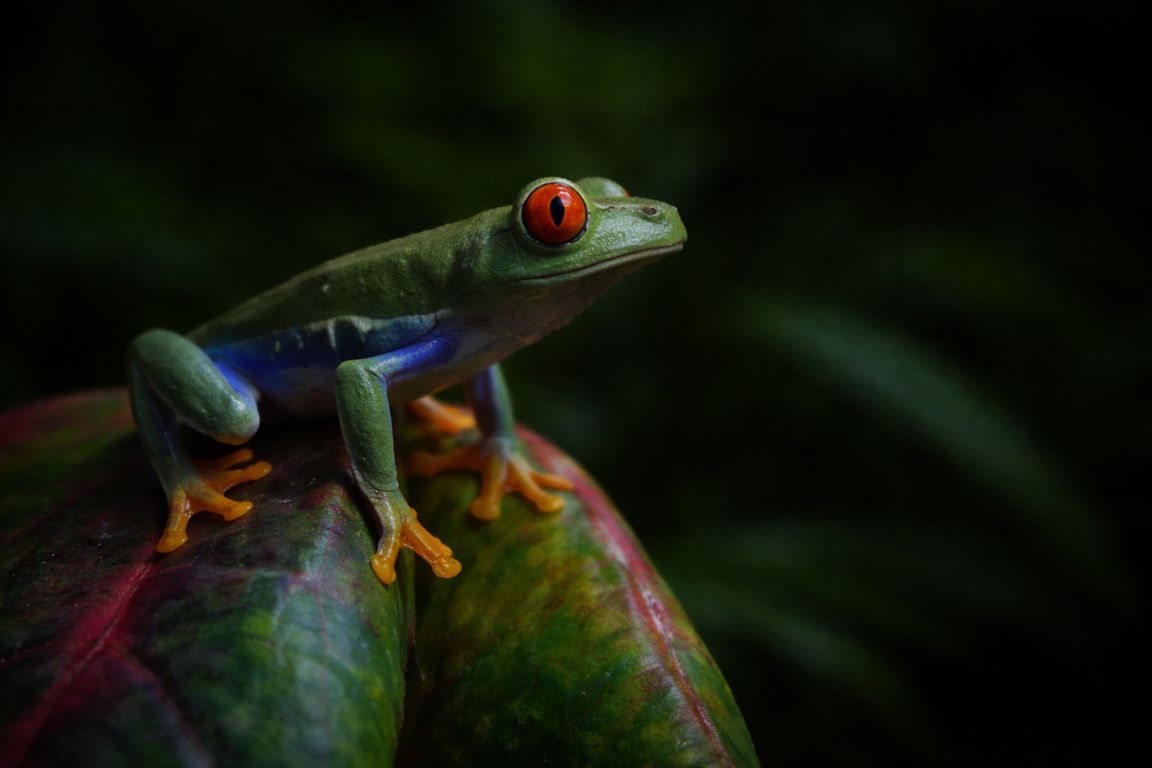 Corcovado is home to 28 lizard species, American crocodiles and spectacled caimans in its rivers, over 40 frog species including the Golfo Dulce poison dart frog found only on the Osa Peninsula, and venomous snakes including the fer-de-lance and the bushmaster. The reptile and amphibian diversity here is one of the richest in the Americas and includes several species with ranges restricted entirely to this corner of Costa Rica.
Most visitors think reptiles and amphibians are secondary to the mammals and birds, and then they spend an hour with a guide who finds a translucent glass frog clinging to a leaf over a stream, or a granular poison dart frog pulsing bright orange against the leaf litter, and recalibrate entirely. These animals are extraordinary up close in a way that photographs rarely capture.
Poison dart frogs are the visual highlight of Corcovado’s amphibian world. Several species are present, including the granular poison dart frog and the Golfo Dulce poison dart frog – the latter found only on the Osa Peninsula and in the immediate surrounding region, making it one of the park’s genuinely endemic species. Their toxicity comes from dietary alkaloids in the wild; captive-raised individuals are not toxic. The colors serve as honest warning signals that have evolved over millions of years. They work. Don’t touch them, and observe that the guide doesn’t touch them either.
Red-eyed tree frogs are nocturnal and therefore not typically seen on standard day tours. Overnight visitors at Sirena sometimes encounter them on the station’s covered walkways after dark – vivid green body, orange feet, and those iconic bulging red eyes that flash open to startle predators when disturbed.
American crocodiles at Corcovado can reach 4.5 to 6 meters in length. They are common along the Rio Claro and Rio Sirena, and regularly visible from the banks during dry season when they bask in the sun. They’re not particularly aggressive by crocodilian standards – they prefer fish to large mammals but specimens over 3.5 meters are physically capable of taking large animals. The river crossing protocols your guide enforces exist because of this. Watch from a safe distance, appreciate them as the prehistoric survivors they are, and let your guide handle the logistics.
The bushmaster deserves mention alongside the fer-de-lance for sheer presence. It is the largest venomous snake in the Americas, capable of reaching 3 meters in length, and lives deep in Corcovado’s primary forest. Sightings are rare even for experienced guides, it is not a snake that turns up on the main trails. If you see one, you have had an exceptionally unusual day and should tell absolutely everyone about it.
What Marine Life Can You Spot Around the Osa Peninsula?
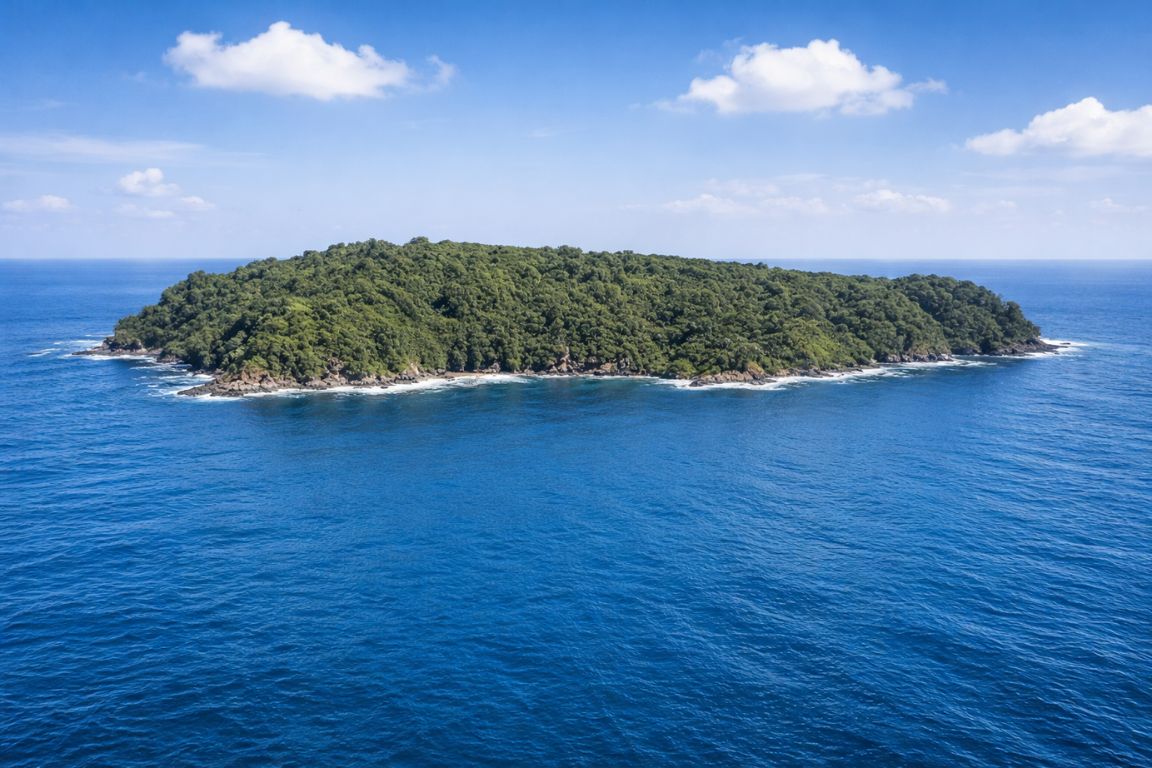 The waters surrounding Corcovado and the Osa Peninsula are among the most biologically rich in the Pacific. Humpback whales visit from both hemispheres, making the Golfo Dulce one of the few places on Earth where whale watching is possible for eight or nine months of the year. Four sea turtle species nest on the beaches. Bottlenose and spinner dolphins are common offshore. Caño Island, accessible by boat from Drake Bay, offers world-class snorkeling with reef sharks, rays, and sea turtles.
The marine dimension of a Corcovado trip is something most visitors underestimate until they’re on the boat. The boat ride into the park from Drake Bay is itself a wildlife experience – the Pacific coast of the Osa Peninsula is an active humpback habitat from July through November for southern hemisphere whales and December through February for northern hemisphere populations. In peak months of August and September, sightings on the transit to or from Sirena are common enough that most operators factor them into the itinerary.
Trying to decide your Osa base? This comparison of Drake Bay vs Puerto Jiménez helps you choose based on budget, how you want to reach the park, and which ranger stations you’re targeting.
The Golfo Dulce is one of only a handful of tropical fjords in the world. Its protected, warm waters create an unusual marine habitat that supports bioluminescent dinoflagellate blooms visible on night kayak tours from May through November – a phenomenon where every paddle stroke and every movement in the water trails glowing blue-green light. It’s the kind of experience that has no adequate photograph.
The four sea turtle species nesting on Corcovado’s beaches – olive ridley, Pacific green, hawksbill, and leatherback – nest from August through January, with the peak in October. Organized night beach tours through separate local operators near Carate offer responsible turtle observation without entering the national park itself. This separation is intentional: the park’s beach areas are not open for nighttime access, but the adjacent beaches outside park boundaries have a conservation program that allows guided viewing.
| Southern Humpback Whale | July – November (peak Aug–Sep) | Golfo Dulce and open Pacific | Antarctic population calves here. Breaches, flukes, nursery behavior. |
| Northern Humpback Whale | December – February | Pacific coast of Osa | Smaller population. Visible on boat transfers to/from Sirena. |
| Bottlenose Dolphin | Year-round | Open water, Golfo Dulce | Common on boat trips. Often bow-ride with tour boats. |
| Olive Ridley Sea Turtle | August – January (most common) | Corcovado beaches and adjacent areas | Most abundant nesting species. Beach tours available near Carate. |
| Leatherback Sea Turtle | October – February | Remote Corcovado beaches | Largest turtle species. Endangered. Rare nesting sightings. |
| Bull Shark | Year-round at river mouths | Rio Sirena, Rio Claro estuaries | Enters rivers at high tide. Observed safely from banks with guide. |
| Hammerhead Shark | Year-round | Open Pacific waters, Caño Island | School in coastal waters. No reported attacks from shore. Seen from boats. |
| Bioluminescence (Dinoflagellates) | May – November | Golfo Dulce at night | Kayak tours available. Every paddle stroke glows. |
What Insects and Invertebrates Are Worth Knowing About?
 Corcovado’s insect life is staggering in scale – over 10,000 estimated species on the Osa Peninsula alone, including more than 100 butterfly species. The blue morpho butterfly, leaf-cutter ant columns, and bullet ants are the three most commonly remarked-upon invertebrate encounters. Most visitors underestimate how much the insect world adds to the experience of the park, and underestimate the bullet ant until they get too close to one.
The blue morpho butterfly is one of those sights that genuinely startles people who haven’t seen one before. The wingspan spans up to 20 centimeters, and the iridescent blue of the upper wing surfaces is not a pigment – it’s structural color, created by microscopic scales that refract light. They flash through forest gaps at low altitudes, a flash of impossible blue against the greens and browns, and then they land and close their wings and disappear almost entirely into the dead-leaf brown of the underside.
Leaf-cutter ants are the forest’s underground farmers. Their columns – streams of hundreds of ants, each carrying a piece of leaf fragment above its head like a sail – cross the trails constantly. They’ve been cultivating underground fungus gardens from cut vegetation for tens of millions of years. The columns can stretch for hundreds of meters and are organized by task: cutters, carriers, and a dedicated class of small ants that hitchhike on the leaf fragments to defend against parasitic flies that target the carriers. Your guide can explain the hierarchy while pointing at what looks like a green river crossing the trail.
The bullet ant (Paraponera clavata) earns its common name from what the Schmidt Sting Pain Index describes as “pure, intense, brilliant pain – like walking over flaming charcoal with a 3-inch nail embedded in your heel.” They are large enough to see clearly, black, and typically found on tree trunks or the forest floor. The sting is not medically dangerous for most people but is reliably described as one of the most intense pain experiences available outside clinical settings. Give them a wide berth and do not grab tree trunks or pick up leaf litter without looking first.
When Are You Most Likely to See Each Animal?
The single most important timing factor for Corcovado wildlife is time of day, not time of year. Dawn and dusk dramatically outperform midday for mammal sightings across every species. The second most important factor is overnight versus day trip – 22 hours inside the park simply produces more sightings than 4 hours. Season matters for specific species: tapirs concentrate at water sources in the dry season; big cat probability is slightly higher in the green season; whale and turtle watching have specific windows.
Here’s the practical guide to timing your wildlife experience:
5 AM to 8 AM is the single best wildlife window in Corcovado. The howler monkey roar starts before first light. Tapirs are on the beach or at the river. Birds are at maximum activity before the heat builds. Sloths are moving to sun-exposed branches to warm up, making them more visible than at any other time. This window is only available to overnight guests at Sirena – day trippers arrive after 8 AM at the earliest.
4 PM to 6 PM is the second critical window. Heat drops, animals resume movement. This is when puma sightings near Sirena are most likely. Tapirs return to the beach in the late afternoon. The evening light through the forest canopy produces the most photographically dramatic conditions of the day.
8 AM to 2 PM is when day trippers are in the park. Wildlife is present but less active in the heat. This is the window for birding at the canopy level, spotting stationary sloths in sun-exposed positions, and watching white-faced capuchins forage through the midstory. Guides can still produce excellent sightings in this window – it just requires more patience and slower movement than the dawn and dusk hours.
Timing is critical in this rainforest. The best time to visit Corcovado National Park tours depends on whether you can handle brutal wet season mud or prefer dry season trails when wildlife congregates at waterholes.
| Baird’s Tapir | 5-8 AM (dawn beach walk) | Dec-Apr (dry, water sources) | Sirena beach and Rio Claro banks |
| Scarlet Macaw | Any time | Year-round | Coastal trees, beach fringe, open areas |
| Howler Monkey | Pre-dawn (heard), dawn (seen) | Year-round | Canopy throughout; very loud at Sirena |
| Puma | 4-6 PM | Year-round; green season slightly better | Trail edges near Sirena station |
| Jaguar | Any – no reliable pattern | Jul-Oct (green season, slightly higher probability) | River corridors, interior trails |
| Poison Dart Frog | Morning, overcast days | Green season (more active) | Forest floor near streams |
| White-lipped Peccary | 8-11 AM | Dry season (herds most visible) | Interior forest trails |
| Humpback Whale | Morning boat trips | Aug-Oct (south); Dec-Feb (north) | Golfo Dulce and open Pacific |
| American Crocodile | 9 AM-2 PM (basking) | Dry season (most visible) | Rio Claro and Rio Sirena banks |
| Blue Morpho Butterfly | Morning, forest gaps | Green season (more active) | Trail gaps, stream crossings |
How Do You Maximize Your Wildlife Sightings in Corcovado?
The five factors that most reliably produce better wildlife sightings are, in order: staying overnight at Sirena rather than doing a day trip, choosing a guide with genuine field experience rather than just certification, moving slowly and quietly on the trails, being positioned for the 5 AM and 4-6 PM windows, and managing your expectations correctly – understanding the difference between “possible” and “guaranteed” before you arrive.
After 10 years of guiding, we know what separates the groups that come back describing an extraordinary experience from the ones who saw monkeys and birds but felt underwhelmed. It almost always comes down to the same variables.
Stay overnight. We’ve covered this in other articles, but it bears repeating in this context. The wildlife available to day trippers and the wildlife available to overnight guests are not equivalent. Dawn and dusk are when Corcovado’s mammals move. You access those windows only if you sleep inside the park.
Choose your guide based on field experience, not just certification. Every guide in Corcovado is ICT-certified. Certification is the entry point, not the differentiator. The guides who consistently produce remarkable sightings are the ones who have spent thousands of hours on these specific trails, who know which trees the peccaries visit in February, which river bend the tapirs favor after rain, which trail section the harpy eagle has been spotted on in the past three months. Ask your operator how long their guides have been working Corcovado specifically. Years on these trails matters more than a credential card.
Move slowly and say less. The single behavior that most reliably reduces wildlife sightings is noise and pace. Groups that talk at normal conversation volume while hiking at a steady pace see a fraction of what silent, slow-moving groups see. Your guide knows this and will manage it, but the more your group cooperates, the better the results.
Carry binoculars and know how to use them quickly. Half the wildlife in Corcovado is in the canopy. Your guide points – you need to acquire the target within a few seconds before it moves. Practice finding a fixed point quickly before you arrive. A harpy eagle that doesn’t wait while you figure out the focus wheel is gone before you see it.
Calibrate your expectations honestly. Jaguars are possible. They are not probable. A visit to Corcovado that doesn’t produce a jaguar sighting has not failed – it has delivered what a realistically informed visit delivers. The monkeys, the macaws, the tapir at dawn, the peccary herd, the poison dart frog on the forest floor, the blue morpho through a gap in the canopy, the crocodile on the river bank, the howler roar before first light – these are the reliable wonders of this park. They are extraordinary. Go ready to be moved by them, and anything beyond that is a bonus.
Need the day trip breakdown? Our Corcovado day tour guide walks you through which ranger stations allow day access, how long you’ll actually spend in the park, and whether it’s worth it versus committing to overnight stays.
What Our Travelers Actually Saw: Wildlife Sighting Data from 7,300+ Corcovado Visitors
After guiding more than 7,300 travelers through Corcovado since 2015, we’ve tracked what our clients actually encounter. The gap between day trip and overnight sighting rates is one of the most consistent patterns in our data.
| All 4 monkey species (same visit) | ~64% | ~93% |
| Baird’s Tapir | ~28% | ~71% |
| Scarlet Macaw | ~89% | ~97% |
| Puma, Ocelot, or Jaguar (any felid) | ~4% | ~22% |
| Poison Dart Frog | ~71% | ~88% |
| American Crocodile | ~58% | ~79% |
| White-lipped Peccary Herd | ~31% | ~67% |
| Blue Morpho Butterfly | ~82% | ~91% |
Data from post-trip wildlife logs maintained by our guide team, 2019-2025 client cohort. Individual sightings are never guaranteed and vary with season, weather, and trail conditions.
The overnight advantage on tapir sightings alone – jumping from 28% to 71% – is the clearest argument for why the overnight stay is worth the additional cost and planning for any visitor whose primary motivation is wildlife.
Frequently Asked Questions
What is the most dangerous animal in Corcovado National Park?
In terms of actual risk to visitors, the fer-de-lance is the animal that guides are most vigilant about. It’s responsible for the majority of serious snakebite incidents in Costa Rica and is perfectly camouflaged on the forest floor. However, no client on a properly guided Corcovado tour has ever been bitten by one. Bull sharks and American crocodiles in the river crossings represent real hazards that are managed entirely through guide protocols at the crossings.
Can you see jaguars in Corcovado?
Yes, Corcovado holds Costa Rica’s largest jaguar population, and research published in 2025 shows the population has increased over the period 2015-2021. Sightings do happen. However, jaguars are solitary, cryptic, and cover large territories. The realistic odds for any given visit are low. An overnight stay in the green season with an experienced guide working active trail corridors gives you the best realistic chance, but no honest guide promises a jaguar sighting.
Are there animals in Corcovado that you can’t see anywhere else in Costa Rica?
Yes. The Golfo Dulce poison dart frog is endemic to the Osa Peninsula. The black-cheeked ant-tanager is found nowhere else on Earth. And no other park in Costa Rica simultaneously supports all six wild cat species, all four monkey species, and a functioning jaguar-tapir-peccary food web. The Central American squirrel monkey, while technically present in a few other Pacific coast locations, has one of its most significant wild populations here.
Is it safe to swim in Corcovado’s rivers and beaches?
The rivers – particularly the Rio Sirena and Rio Claro crossings – are home to bull sharks at high tide and American crocodiles. Never enter these rivers without your guide’s explicit instruction and timing. The ocean beaches carry riptide risks and no lifeguards. Swimming in designated calm areas with your guide’s knowledge is generally safe, but the coastal waters of the Osa Peninsula are genuinely wild. Check with your guide before entering any water.
When is the best time to see wildlife in Corcovado?
Time of day is more important than time of year for most species. The 5 AM to 8 AM dawn window and the 4 PM to 6 PM late afternoon window dramatically outperform midday for mammal sightings. For specific species: tapirs are most reliable in the dry season (December to April); big cat probability is slightly higher in the green season (July to October); humpback whales peak from August through October offshore.
Do you need binoculars for wildlife watching in Corcovado?
Yes. A significant portion of Corcovado’s wildlife – especially birds, sloths, and many mammals – is in the canopy 20 to 30 meters above the trail. Binoculars are not optional equipment here. An 8×42 or 10×42 configuration is ideal for the forest. A spotting scope with your guide upgrades the high-canopy and distant sightings considerably.
Written by Mateo Alejandro Rivera
Costa Rican tour guide since 2015 · Founder, Corcovado National Park Tours
Mateo has guided over 7,300 travelers through Corcovado National Park and the Osa Peninsula since founding the agency.
Your Corcovado Next Step
Choose Your Date Before Planning The Rest
One Night At Sirena From Drake Bay. Boat transfers, guided morning and afternoon walks, Sirena lodging, park fees and four meals. Check your travel date before arranging your remaining accommodation and transport.
2 days / 1 night · Meet at Rancho Corcovado Lodge at 5:50 am; briefing the day before recommended. Shared station accommodation; moderate fitness. Tips extra. Non-refundable.
Choose a date to see scheduled departures. Availability and final price are confirmed on Viator.
Initial editorial recommendation. Change the trip choices below to find a route that fits; the operator confirms suitability and availability.
Compare Routes And Adjust Your Trip
Sirena Day Trip From Drake Bay · 7–8 hours. Boat to Sirena, guided trails, park fees and lunch. Meet at Rancho Corcovado Lodge; returns to Drake Bay. Lunch location can vary; confirm with Pacheco. Not wheelchair accessible. Non-refundable.
Caño Island Snorkeling From Drake Bay · 6 hours. Two snorkeling stops, equipment, guide, transport, park fees and lunch. Meet at Rancho Corcovado Hotel at 7:15 am. Returns to Drake Bay; requires comfort in water. Not recommended for poor cardiovascular health. Wildlife sightings vary.
The Night Tour With Tracie And Gianfranco · 2–3 hours. Guided nocturnal wildlife walk with a spotting scope and bat detector. Outside Corcovado. Stay in Agujitas within 20 minutes on foot of Jinetes de Osa Inn; no car access or pickup. Meet 7:25 pm. At least 2 guests; ages 8–65 in bookable bands. Moderate fitness and good balance required.
Compare Your Own Total Quotes
Enter two complete quotes in the same currency, including transport, meals and accommodation for the same party. A difference is not a saving unless the inclusions are comparable.
Add both totals and your party size to compare.